
In six years at a record store in Chicago I replaced more inner sleeves than I can count. The paper sleeve that comes with a new record is not designed to protect it. It is designed to fill the jacket. Paper fibres shed directly into the groove on every insertion and removal. The fix costs $15 for 100 sleeves and takes an afternoon. Whether you spent $200 or $800 on a turntable, the sleeve touching your record matters. This guide covers the five best vinyl record inner sleeves worth buying, ranked by what actually matters.
Quick Comparison: All Five Sleeves

Anti-Static Sleeves
- Find on Amazon
Same 3-ply HDPE construction as MoFi Original Master
100-pack and 500-pack available for large collections
Can crumple slightly on fast jacket reentry
3-ply HDPE + rice paper
Pack size
100 sleeves
Per sleeve cost
$0.15
Anti-static
Yes

Master Sleeves
$0.40/sleeve
- Find on Amazon
Translucent front panel: read labels without removing record
Absolute Sound and Gear Patrol Editors Choice
Only 50 per pack: more reorders for large collections
3-ply HDPE + rice paper
Pack size
50 sleeves
Per sleeve cost
$0.40
Anti-static
Yes

3-Ply
$0.54/sleeve
- Find on Amazon
Prime next-day shipping: available today
Reliable 3-ply HDPE construction
Hudson Hi-Fi gives the same performance at $0.15/sleeve
3-ply HDPE + rice paper
Pack size
50 sleeves
Per sleeve cost
$0.54
Anti-static
Yes
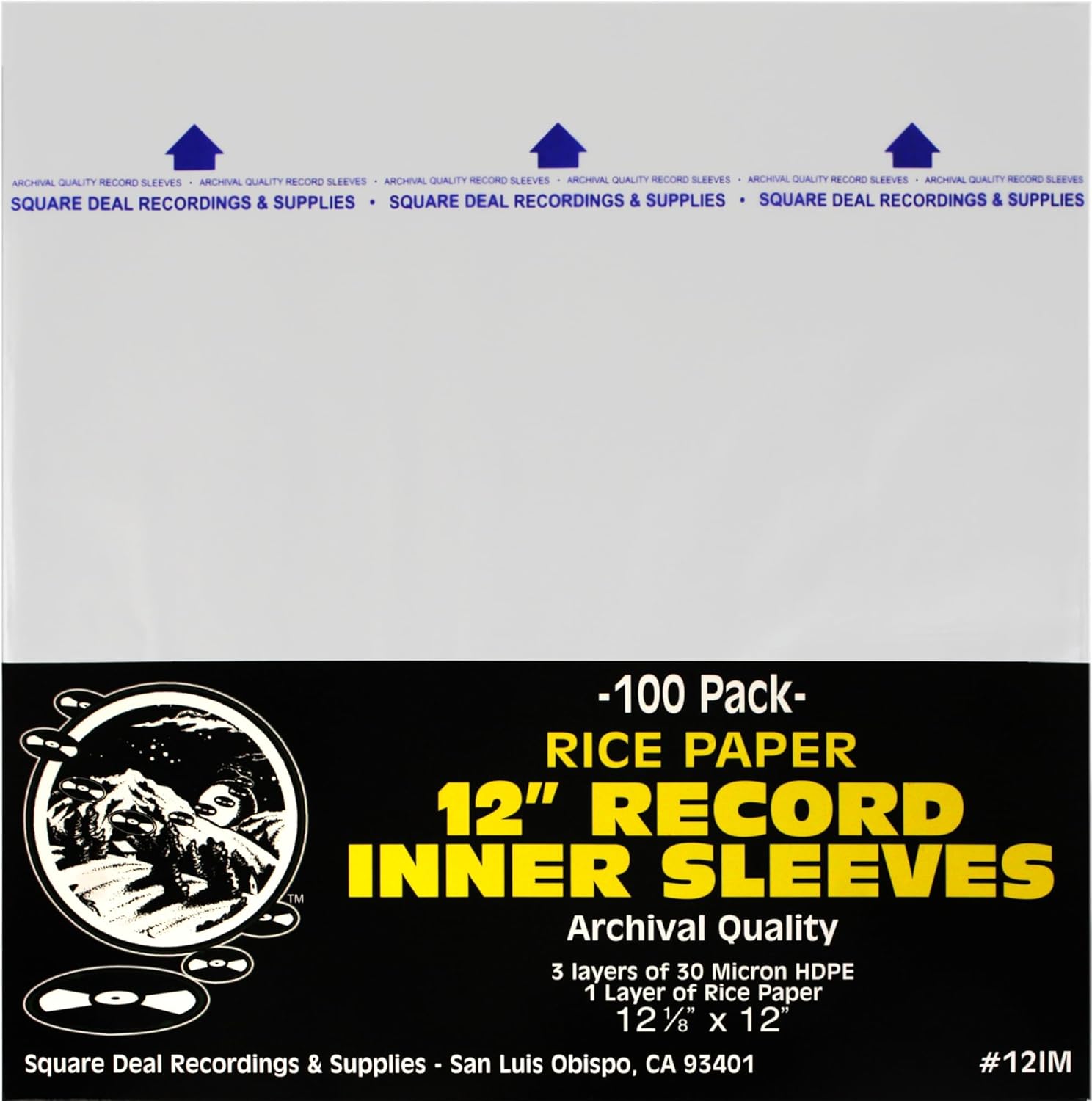
#12IM
3-ply · $0.29/sleeve
- Find on Amazon
Amazon’s Choice: 4.8 stars, 1,126 reviews, 300+ bought/month
100-pack at $0.29/sleeve: beats Big Fudge and MoFi on value
Slightly more expensive than Hudson Hi-Fi at $0.29 vs $0.15
3-ply HDPE + rigid paper insert
Pack size
100 sleeves
Per sleeve cost
$0.29
Anti-static
Yes

Lined Paper
- Find on Amazon
951 reviews, 4.7 stars, Prime, In Stock
Stiffer paper feel preferred by some collectors over HDPE
Paper still sheds fibres over time, though less than unlined paper
Hudson Hi-Fi at $0.15/sleeve gives better HDPE protection
Heavyweight kraft paper + poly lining
Pack size
100 sleeves
Per sleeve cost
$0.26
Anti-static
Partial (poly lining only)
Why the Sleeve Next to Your Record Matters More Than People Think
People spend hundreds of dollars on a turntable and then store their records in the paper sleeve they came with. I saw this constantly at the store. Customers would bring in records they had owned for twenty years, played carefully, stored standing upright, and wonder why they sounded grainy and rough. The answer, most of the time, was the sleeve.
Plain paper inner sleeves shed cellulose fibres with every insertion and removal. These fibres are invisible to the naked eye but they accumulate in the groove over years of play. The stylus does not distinguish between groove modulation and debris. It reads everything, which means every fibre that has settled into the groove contributes to the surface noise you hear. This is not the same as dust contamination that a record brush removes before each play. These fibres are physically compacted into the groove wall by the stylus itself on each pass. Cleaning your records thoroughly before resleeving removes surface contamination, but it cannot undo groove damage from years of paper-fibre contact. Paper fibre contamination also accelerates stylus wear over time, which is why serious collectors treat inner sleeves as a maintenance priority, not an afterthought.
Paper also builds static. Static attracts airborne dust particles to the record surface. A freshly cleaned record slid back into a paper sleeve immediately begins accumulating static charge. An HDPE sleeve is anti-static by construction. The material does not generate the triboelectric charge that paper does. This alone is worth the $15 to resleeve an entire collection.
The Only Thing You Need to Know About Inner Sleeve Materials
There are three constructions available. The right one depends on how you use your collection. Once you have your sleeves sorted, the next meaningful upgrade is typically a dedicated phono preamp if you are still running the built-in stage on your turntable. But start here.
One note most guides skip: “rice paper” inner sleeves are not made from rice paper. The term describes the texture. Every sleeve marketed as rice paper uses standard thin paper sandwiched between HDPE layers. The HDPE does the protective work. The paper layer provides structure. MoFi, Hudson Hi-Fi, Big Fudge, and every MoFi-style clone use this identical construction regardless of what the packaging says. The right pair of speakers for your turntable will reveal the difference that proper sleeve maintenance makes over time.
The Five Inner Sleeves I Recommend and One I Would Skip
Ranked by value, not prestige.
Best Value
Hudson Hi-Fi Anti-Static Vinyl Record Inner Sleeves 100pk
This is the sleeve I tell most people to buy. The Hudson Hi-Fi 100-pack costs around $15 and the per-sleeve cost of $0.15 is the best available on Amazon for a proper HDPE sleeve. The construction is 3-ply HDPE with the same paper-sandwich design as MoFi. Forum consensus across multiple vinyl communities is that this sleeve performs identically to MoFi in daily use. The 100-pack format is the right quantity for most collections and means fewer reorders. Buy the 500-pack if you have a large collection to resleeve in one session.
Industry Benchmark

Mobile Fidelity Original Master Record Inner Sleeves 50pk
The Mobile Fidelity Original Master sleeve has been the reference point in vinyl protection for over 40 years. Mobile Fidelity uses these in their own LP packaging. The Absolute Sound has repeatedly named MoFi accessories Editors Choice. The reason to buy MoFi over Hudson Hi-Fi is brand confidence, not measurable performance difference. Both use the same 3-ply HDPE construction. At $0.40 per sleeve versus $0.15 for Hudson Hi-Fi, you are paying for the original that everything else is measured against.
Best for Prime Buyers
Big Fudge 12″ Vinyl Record Sleeves Premium Inner Sleeves 50pk
Big Fudge is the most reviewed HDPE inner sleeve on Amazon with 21,083 ratings and Prime next-day shipping. Performance is comparable to Hudson Hi-Fi and MoFi. The honest reason this ranks third rather than first is cost: at $26.99 for 50 sleeves the per-sleeve cost of $0.54 is the highest in the standard HDPE category. Hudson Hi-Fi gives you 100 sleeves of the same construction for $15. You are paying a significant premium for the Big Fudge name and Prime delivery convenience. Buy this only if you need sleeves today.
Amazon’s Choice – Extra Rigidity
Square Deal 12 Inch Record Inner Sleeves 3-Layers Anti-Static HDPE 100pk
The Square Deal #12IM is Amazon’s Choice in the inner sleeve category with 1,126 reviews, 4.8 stars, and 300 or more units bought per month. The construction is 3-ply HDPE with an enclosed paper insert specifically designed to add extra rigidity compared to standard MoFi-style sleeves. The result is a sleeve that holds its shape more firmly on jacket reentry and is less prone to crumpling. At $28.95 for 100 sleeves the per-sleeve cost of $0.29 beats Big Fudge and MoFi. Made by a small independent supplier based in San Luis Obispo, California.
Budget Entry Point

P.Y.P 100ct 12-Inch Poly-Lined Record Inner Sleeves White Kraft Paper
P.Y.P Poly-Lined Paper sleeves are better than the plain paper sleeve your record came with and nothing more. The heavyweight white kraft paper is lined with a high-density polyethylene inner layer that reduces the cellulose fibre shedding that causes groove contamination. With 951 reviews and 4.7 stars this is a legitimate product. The case for buying it over Hudson Hi-Fi is limited since Hudson Hi-Fi costs roughly the same for 100 sleeves and delivers full HDPE protection. Where P.Y.P makes sense is for collectors who prefer the traditional paper sleeve feel with a poly lining upgrade.
How to Resleeve Your Record Collection
Work one record at a time rather than in batches. The process takes around 30 seconds per record once you have a rhythm. Clean each record before resleeving if it has not been cleaned recently. Sealing a dusty record into a new sleeve defeats the purpose.
- Remove the record from its jacket holding by the edges only. Avoid touching the playing surface.
- Slide the record out of the old paper sleeve. Discard the paper sleeve.
- Hold the new HDPE sleeve open at the top and slide the record in label-side up so the opening faces the label.
- Return the sleeved record to the jacket with the sleeve opening facing up, not down. This keeps the record resting on the closed base of the sleeve during storage.
- Do not reuse the original paper sleeve as a second layer. It reintroduces fibre contamination.
One positioning note most guides miss: most records come from the factory with the inner sleeve inserted opening-down. Reverse this when you resleeve. Opening up means gravity works in your favour during storage rather than against you.
Inner Sleeves vs Outer Sleeves: What Is the Difference
This guide covers inner sleeves only. The two sleeve types serve different purposes and you need both for complete protection.
Both are worth buying. Inner sleeves protect the part that matters for playback. Outer sleeves protect the artwork and resale value. Hudson Hi-Fi, MoFi, and Big Fudge all sell matching outer sleeve options if you want to keep brands consistent across your collection.
Frequently Asked Questions
Inner sleeves go around the vinyl record itself, inside the jacket. They protect the groove from static, dust, and fibre contamination. Outer sleeves are clear polypropylene bags that go around the entire jacket and protect the artwork from ring wear and shelf damage. You need both for complete collection protection. This guide covers inner sleeves only.
Yes, but less than the price suggests. The $15 Hudson Hi-Fi and the $20 MoFi perform almost identically in daily use because they use the same 3-ply HDPE construction. The Square Deal #12IM at $28.95 for 100 sleeves has extra rigidity from a thicker enclosed paper insert, which means better jacket reentry and more structural support. The premium is worth paying if you handle your records frequently. For a standard listening collection, Hudson Hi-Fi is the correct buy.
No. Even records pressed at reputable plants typically ship with plain paper or thin poly-lined paper sleeves. Replace them before first play if the records matter to you.
Buy one per record plus around 20 percent extra for future acquisitions. For a collection of 100 records buy a 100-pack and a 25-pack. Hudson Hi-Fi sells 100-packs and 500-packs. The 500-pack is the right buy for serious collectors resleeving a large collection in one session.
No. The term describes the texture, not the material. Every sleeve marketed as rice paper uses standard thin paper sandwiched between HDPE layers. The HDPE does the protective work. The paper provides structure. MoFi, Hudson Hi-Fi, Big Fudge, and Square Deal all use this identical construction.
Not directly. Replacing paper sleeves stops ongoing fibre contamination of the groove, which prevents new surface noise from developing. Records already played hundreds of times through paper sleeves will not sound better after resleeving. Think of it as maintenance rather than an upgrade.
James Calloway has been collecting vinyl for 22 years. He spent six years working at an independent record store in Chicago, where he sleeved, cleaned, and graded thousands of records for resale and customer collections. He writes all vinyl care guides and gear reviews for VinylPickup.com.


