
Updated November 2026
Record Player Setup Guide: How to Set Up a Turntable
How to set up a turntable step by step, plus eleven complete record player and speaker setups, from a first bedroom system to a proper hi-fi, five of them listened to as whole systems. Plus the one wiring rule that saves most beginners a headache, and a 60-second finder that builds a turntable setup around your budget.
Not sure which setup?
Find your turntable and setup in 60 seconds
Five quick questions about your budget, how you listen and how you like to play. The finder picks from every turntable we cover, tested or researched, and gives you one setup with everything you need and nothing you don’t.
- 5 quick questions
- 1Budget
- 2Listening
- 3Sound
- 4Play style
- 5Extras
Compare
All 11 record player and speaker setups at a glance


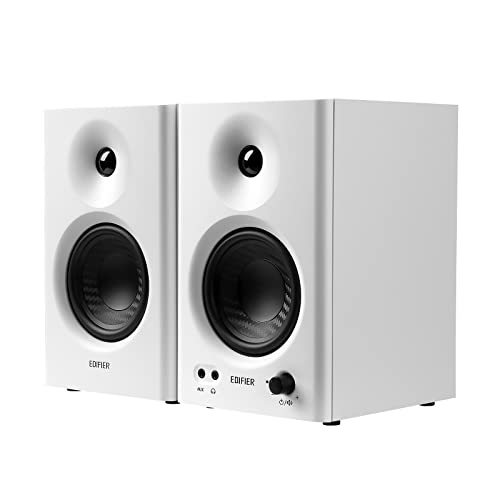

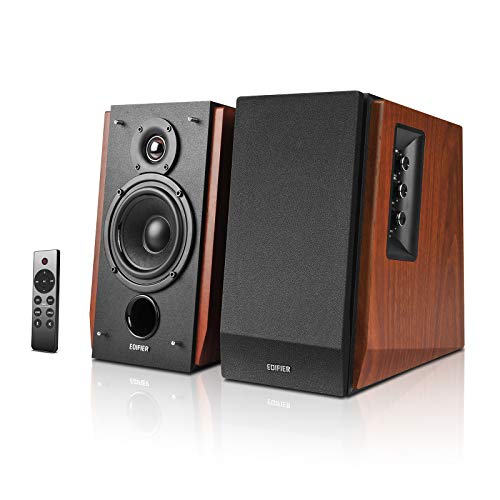


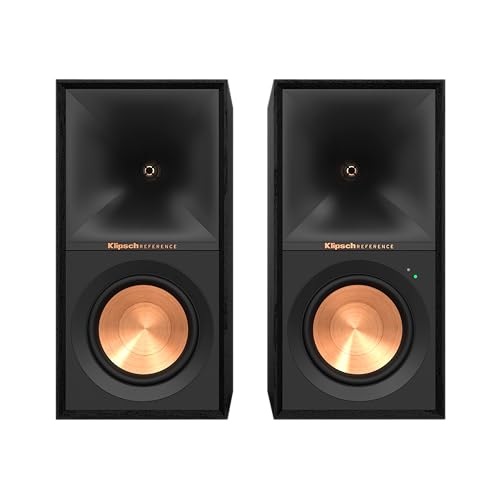


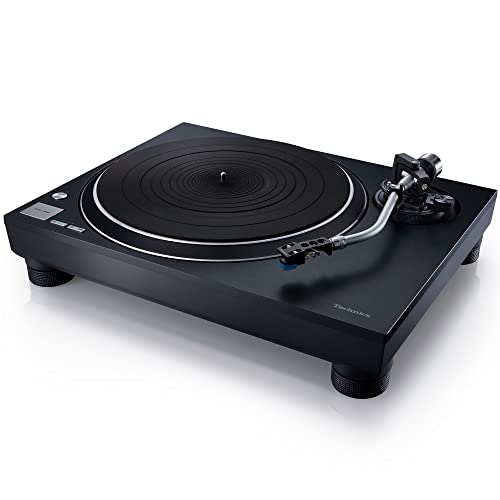


Setups 1 to 5 were listened to as complete systems. In 6 to 8 we tested the parts separately (the R-50PM in setups 6 and 7 was compared rather than fully scored); 9 to 11 are researched and labeled. Totals add up today’s Amazon prices for every part of the setup. “Add to cart” puts the whole setup in your Amazon cart, and nothing is bought until you check out there.
The setups
The 8 tested record player setups, by budget
1 to 5 were listened to as complete systems; 6 to 8 use parts we tested separately, as each card says. Reviewed November 2026.
The Starter
Best for: First record player, lowest cost
Why it works. The easiest way into vinyl. No counterweight, no alignment, no extra box: fit the belt, plug in one cable, set the switch to LINE.
What we heard. Smooth and full enough for casual listening. On “Dreams,” vocals stay clear, though busy passages get a little crowded.
Watch out. Limited upgrade path. The LP60X stylus options are few, so you’ll outgrow it sooner than the LP70X.
Step up for a real stylus upgrade path. The speakers can stay.
Best Value
Best for: Most people starting out
Why it works. Nearly as simple as the Starter, but the factory-fitted VM95 cartridge gives you a real stylus upgrade path later.
What we heard. A little more composed than the LP60X pairing, especially on drums and dense arrangements like “Aja.”
Watch out. After a stylus upgrade, the Edifiers become the limiting part. That’s your next upgrade, not the turntable. Some early LP70X units skipped; Audio-Technica fixes affected decks free through its LP70X service program, and Amazon’s return window covers you either way.
First a VMN95E elliptical stylus. Then speakers with more detail, like the Kanto YU4.
The Desk Setup
Best for: Home office, listening up close
Why it works. Clearer and more restrained than the R1280DB at desk distance. Monitor mode for careful listening, Music mode for background.
What we heard. On “Don’t Know Why,” the vocal and piano are well defined for the money. On “Get Lucky,” the bassline is clear but has little weight.
Watch out. Desk only. Weak deep bass, no Bluetooth, no remote. The Audioengine step-up adds Bluetooth and tighter stereo, but it’s still light on bass. Some early LP70X units skipped; Audio-Technica fixes affected decks free through its LP70X service program, and Amazon’s return window covers you either way.

Tighter stereo imaging, Bluetooth 5.3 and a subwoofer output, in the same desk space.
The Wireless Setup
Best for: Automatic play, Bluetooth and upgrades
Why it works. Plays over a cable or over Bluetooth, and both ends support aptX, so the wireless link isn’t stuck on basic SBC. The removable headshell makes cartridge upgrades easy later.
What we heard. The R1700BTs sounded livelier than the R1280DB pair, with more bass weight on “The Chain.” In our Bluetooth tests, the LP3XBT sounded close to the cable at normal volume.
Watch out. No optical input on the R1700BTs, so it’s a weaker pick if the TV shares the speakers. More setup than the LP70X (counterweight and anti-skate).
A VMN95E stylus first. Then speakers with more punch and volume, like the Klipsch R-50PM, the newer model that played deeper in our level-matched comparison.
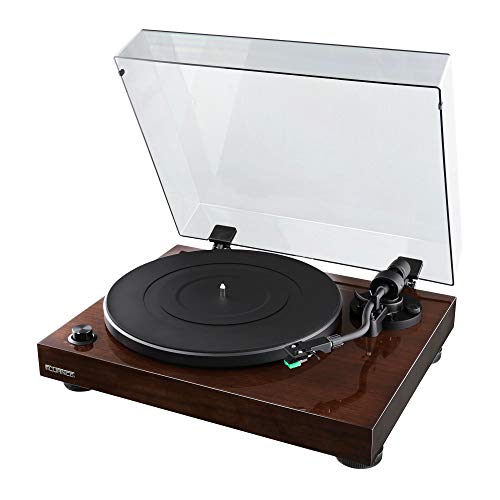
The Compact Hi-Fi
Best for: A small room and a better turntable
Why it works. The RT82 has no preamp, and the YU4 has one built in, so a three-box system stays at two boxes.
What we heard. Natural and smooth. Acoustic guitar and vocals on “Come Away With Me” are the highlight.
Watch out. Bass is controlled rather than big. Connect the ground wire, or expect a low hum. Buy the YU4 on sale, around $300 to $350; at its $480 list price, the Best Value setup’s Edifier pair is the better buy.

More bass and volume when you move to a bigger room, with the same phono input.
The Living Room
Best for: Rock and pop, no amplifier
Why it works. A real jump in punch and volume over the Edifier systems, with a phono input and no separate amplifier. The R-50PM replaced the R-51PM, with bigger cabinets for deeper bass.
What we heard. In our level-matched comparison with the Edifier R1280DBs, the R-50PM was clearly better on dense, loud and bass-heavy music, with deeper bass and far more headroom.
Watch out. The horn treble is forward and can tire on bright records, and the cabinets are about 14 inches tall. We compared the R-50PM rather than giving it a full scored test.
If the Klipsch treble tires you on bright records, the Kanto YU6 is smoother and has a phono input too.
The Premium Powered
Best for: Simple living-room system, top turntable
Why it works. The same powered Klipsch pair as the Living Room, with a better turntable: rock-steady Technics direct drive that starts in under a second. No amplifier, and the R-50PM’s phono input or the Technics’ own preamp, whichever you prefer.
What we heard. The SL-40CBT was the most stable deck in our Bluetooth tests, with no audible speed wobble on long notes. In our level-matched comparison, the R-50PM played deeper and far louder than the Edifier R1280DBs before straining.
Watch out. Manual: you lift the arm at the end of each side. The stock stylus is a basic conical; a VMN95E is the obvious upgrade. We tested the SL-40CBT and compared the R-50PM, but haven’t listened to this exact pair together.

The stock conical stylus is the weak spot. A genuine Audio-Technica VMN95E elliptical clicks straight onto the same cartridge.
The Hi-Fi System
Best for: Serious stereo, long-term upgrades
Why it works. The biggest sound of the eight: scale, punch and separation. The Yamaha’s phono input does the preamp job, so there’s no extra box to buy.
What we heard. We tested the A-S301 and RP-600M II together for about 22 hours, with our Fluance RT85 and AT-LP120XUSB. On “Jungleland,” clarity and separation were excellent, and the horn treble was more controlled than we expected. The Carbon EVO was tested separately in its own review.
Watch out. Placement-sensitive speakers (ours ended up about 14 inches from the wall, with less toe-in to tame the top end), more space and more setup. The US listing ships with a Sumiko Rainier, the version our Carbon EVO review tested. Pro-Ject has replaced it with the Debut EVO 2, so buy it while new stock lasts.

Sumiko’s next step up, and a straight swap onto the Rainier body that ships on the US Carbon EVO. If yours has the Ortofon 2M Red, the 2M Blue stylus is the equivalent step.
No setup matches that filter.
Going further
Three researched systems: more detail, direct drive and the high end
We haven’t listened to these three as complete systems yet, so they sit apart from the first eight and say so. We built them from the parts’ published specifications and reviews, and from the same wiring rule as everything else here: exactly one phono preamp.
The Detail System
For listeners who want sharper stereo imaging and a cleaner top end than the Klipsch hi-fi setup, from a smaller pair of speakers.

Why it should work. The RT85 already passed our hands-on test, and because it has no built-in preamp, the A-S301’s phono input is the only one in the chain. KEF’s Uni-Q design puts the tweeter in the middle of the woofer, which keeps the stereo image steady when you’re not sitting dead center.
Watch out. The Q1 Meta is fairly insensitive at 86 dB, so it wants a real amplifier. The A-S301 has the power; a small desktop amp doesn’t. Keep the rear ports at least a hand’s width from the wall.
How it connects. RT85, RCA plus ground wire, into the A-S301’s PHONO input, then speaker wire to the KEF Q1 Meta.
The Direct-Drive Hi-Fi
For a living room, and for someone who wants Technics direct drive with a bigger, fuller pair of speakers than the Detail System, still with no extra boxes.
Why it should work. The SL‑100C has no phono preamp of its own, so the A‑S501’s PHONO input is the only one in the chain, exactly as the one-preamp rule asks. It’s the hi-fi version of the famous Technics direct drive, without the DJ pitch control and strobe, and SoundStage reviewer Thom Moon uses one as his own reference turntable. What Hi-Fi? gave the Q3 Meta five stars for a natural, even-handed sound, and KEF’s Uni-Q driver keeps the stereo image steady when you sit off to one side.
Watch out. The Q3 Meta is a 4-ohm speaker, so set the A‑S501’s impedance switch to LOW before you switch it on: Yamaha specifies LOW for 4 to 6 ohm speakers. The SL‑100C ships with a conical AT‑VM95C, and a VMN95E stylus is the cheap upgrade. Its auto-lift raises the arm at the end of a side, but the platter keeps turning; owners switch on a hidden auto-stop with a button sequence, and some report the lift can trigger a little early.
How it connects. SL‑100C, RCA plus ground wire, into the A‑S501’s PHONO input, then speaker wire to the KEF Q3 Meta. Impedance switch on LOW.
Also handy: Floor stands put the Q3 Meta at ear height. The Kanto SP32PL pair holds 30 lb each, but its largest top plate is 7 by 7 inches and the Q3 Meta is about 12 inches deep, so use the included screw or choose stands with a deeper plate. The A‑S501’s subwoofer output takes a Klipsch R-100SW if you want more bass.
The High-End System
For a dedicated listening room, and for someone who wants the turntable to be the best part of the system.
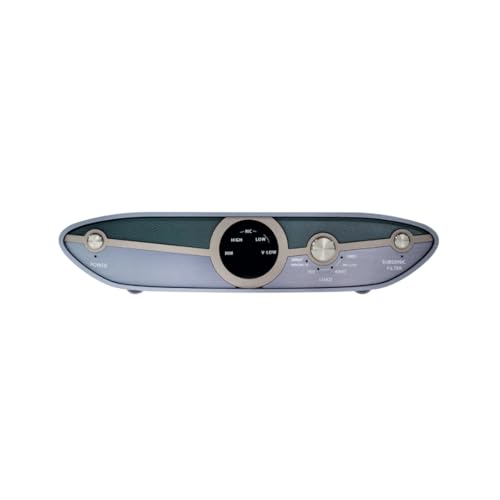
Why it should work. The X2 B is a heavy, purist deck: a 2 kg acrylic platter, a carbon and aluminum tonearm, and Ortofon’s Quintet Red moving-coil cartridge fitted at the factory. It took an EISA award, and Hi-Fi News was openly excited about it. ELAC’s DB63 pairs a 6.5-inch aramid-fiber woofer with an aluminum dome tweeter, enough to fill a medium room without a subwoofer.
Watch out. A moving-coil cartridge makes a far smaller signal than the moving-magnet cartridges in the rest of this guide, and the Yamaha’s phono input only handles moving magnet. So the iFi does the phono work and feeds a line input. The balanced XLR output is optional; plain RCA works fine to start. The DB63s weigh 17.3 lb each, so use solid stands.
How it connects. X2 B, RCA plus ground wire, into the iFi Zen Phono 3 set to MC, then into a line input on the A-S501, then speaker wire to the ELAC DB63.
Sources: Pro-Ject, Hi-Fi News and EISA on the X2 B; SoundStage on the SL-100C; What Hi-Fi? on the Q3 Meta; ELAC’s published DB63 specifications; KEF’s Q Meta specifications; Yamaha’s A-S301 and A-S501 product pages, including the A-S501’s impedance switch.
The one rule
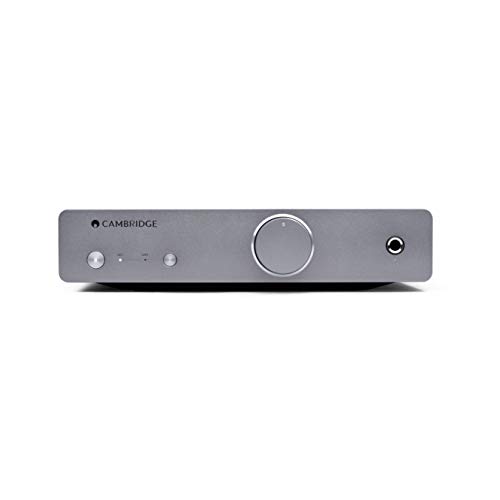
What you need: one phono preamp, never two
A cartridge makes a tiny signal. It needs exactly one phono preamp to reach normal level. It can live in the turntable, the speakers or the amplifier. Every setup above has exactly one. Even speaker makers spell this out: Edifier’s own support page tells R1280DB owners their turntable must have a built-in preamp.
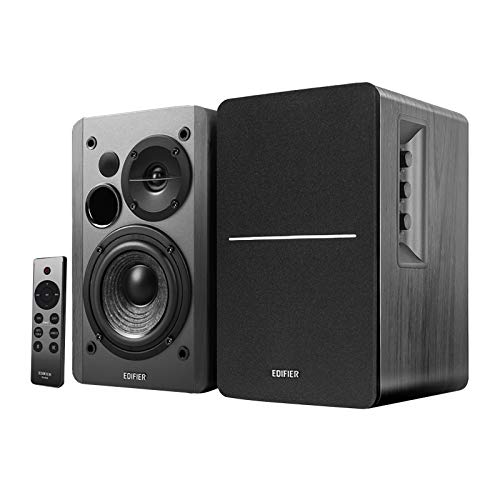
Edifier R1280DB, Edifier MR4, Audioengine A2+. These speakers have no phono input, so the turntable must do the job.
Setups 1 to 4Kanto YU4 and YU6, Klipsch R-50PM, Yamaha A-S301. Their built-in preamp does the job, so connect the ground wire too.
Setups 5 to 8No preamp: PHONO into a LINE input sounds very quiet and thin.
Two preamps: LINE into a PHONO input sounds loud and distorted.
Step by step
How to connect a record player to speakers
Powered speakers without a phono input
- Set the turntable switch to LINE.
- Run the RCA cable to the speakers’ RCA or AUX input.
- Pick that input on the speakers and start at low volume.
Powered speakers with a phono input
- Set the turntable to PHONO, or use a deck with no preamp.
- Connect RCA to the speakers’ PHONO input and attach the ground wire.
- Set the speakers’ switch to PHONO.
Amplifier and passive speakers
- Turntable RCA and ground wire into the amplifier’s PHONO input.
- Speaker wire from the amplifier to each speaker: red to red, black to black.
- Select PHONO on the amplifier.
You already own a receiver with PHONO
- Turn the turntable’s preamp off, or buy a deck without one.
- Connect RCA and ground to PHONO.
- That’s the whole job: no new speakers needed.
Bluetooth instead? On the AT-LP3XBT through the same speakers, Bluetooth and the cable sounded close at normal volume. Use the cable when the gear is close together; use Bluetooth when placement matters more.
Step by step
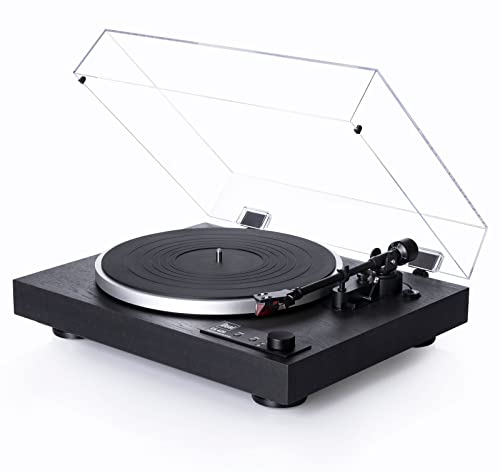
How to set up a turntable, step by step
These ten steps cover any manual turntable with a counterweight, like the AT-LP120XUSB, Fluance RT82 or Pro-Ject Carbon EVO, and take about 20 minutes the first time. Automatic decks such as the AT-LP60X and AT-LP70X come balanced from the factory, so skip steps 4 to 7.
- 1Find a level, solid spot
Use a bubble level or a phone level app. Keep the turntable off the shelf the speakers stand on, or bass from them can feed back into the stylus.
- 2Fit the platter and belt
On a belt-drive deck, loop the belt around the platter’s inner rim, then pull it over the motor pulley with the ribbon provided. Direct-drive decks skip this step.
- 3Add the mat, headshell and dust cover
Lay the mat, twist the headshell onto the arm if it comes separately, and slot the lid hinges in. Leave the stylus guard on for now.
- 4Balance the tonearm
Set anti-skate to zero, take the stylus guard off, then turn the counterweight until the arm floats level on its own. Rest the arm, and turn only the numbered ring to 0.
- 5Set the tracking force
Now turn the whole counterweight, ring and all, to your cartridge’s force: 2.0 g for an Audio-Technica VM95, 1.8 g for an Ortofon 2M Red. A stylus gauge confirms it.
- 6Match the anti-skate
On most decks, set the anti-skate dial to the same number as the tracking force. It stops the arm pulling toward the center and wearing one groove wall.
- 7Check the alignment
A factory-fitted cartridge is already aligned. If you fitted your own, print a free alignment protractor and adjust the cartridge in its slots until the stylus lines up.
- 8Connect it, with one preamp
Set the turntable to LINE for speakers without a phono input, or PHONO into a PHONO input, and attach the ground wire. See the one-preamp rule.
- 9Pick the speed
33 rpm for LPs, 45 for most 7-inch singles. Automatic decks also have a record-size selector, which you set to match.
- 10Play the first side, low
Start the volume low, lower the arm with the cue lever, and listen for hum between tracks. Hum usually means the ground wire or the switches, covered below.
Set it up right
Turntable setup problems: five things that matter
Once it’s set up, five habits keep it sounding right. None of them needs special skill, and the first two solve most problems we hear about.
- 1Get the switches right
The PHONO and LINE settings cause more first-day problems than anything else. Check them before anything else.
- 2Trust a gauge, not the ring
The numbers printed on the counterweight are a guide, not a measurement. A cheap digital stylus gauge confirms the force from step 5, and is worth rechecking after a move.
- 3Keep it level and away from the speakers
Speakers on the same light desk can feed bass back into the stylus and build into a rumble. Separate stands fix it.
- 4Give rear-ported speakers room
Start 8 to 16 inches from the wall. Closer adds bass weight; farther opens up the sound.
- 5Hum? Work through it in order
Check the switches, connect the ground wire, move RCA cables away from power adapters, try another cable, then listen with the motor stopped.
Other situations
Already own a turntable and speakers, or one of them?
You only need a turntable. A deck without a preamp, like the Pro-Ject Carbon EVO, puts your money into the turntable itself.
Best turntables You want to listen on headphonesAny Bluetooth turntable pairs with Bluetooth headphones. The AT-LP3XBT is our pick.
Best Bluetooth turntables You have a turntable, not speakersIf it has a built-in preamp, any powered speakers work. If not, pick speakers with a phono input.
Best speakers for a turntableResearched picks
More turntables for your record player setup, by budget
Nine more turntables the setup finder can pick, from a budget Bluetooth deck to a Technics direct drive. Most of them we haven’t had in for testing yet, so each is labeled, with the catch we found in expert reviews, maker specs and owner reports. One, the Pro-Ject T2 Super Phono, we have since tested, and its notes are below. Stock and sellers were checked on Amazon on November 2, 2026; the prices you see are live. Pair any of them with the speakers in the setups above, following the one-preamp rule.
Under $500
Bluetooth on the smallest budget, and USB for digitizing without giving up automatic play.
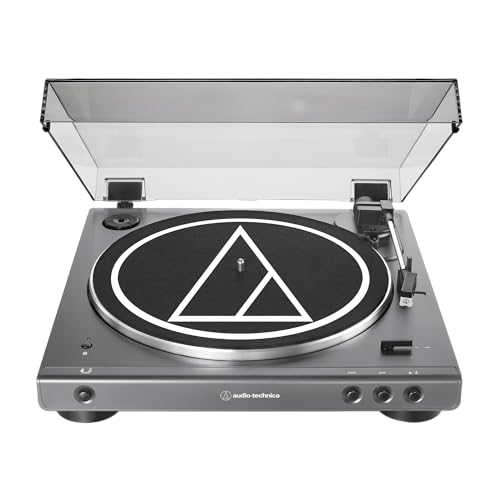
Audio‑Technica AT‑LPGO-BT
Automatic, Bluetooth, built-in preampSellers and deal sites describe it as the AT‑LP60XBT sold under another name, and Amazon lists both on one page with one shared set of ratings. So it’s our tested LP60XBT experience, usually for less: press start, play over Bluetooth or a cable, with the preamp built in.
The catch: Audio-Technica launched it as a Walmart exclusive, so check who sells it. On November 7 Amazon’s listing was $199 from Technica House, shipped by Amazon, about $60 less than the LP60XBT; if the LP60XBT costs the same, buy that one.

Audio‑Technica AT‑LP60XBT-USB
Automatic, Bluetooth and USB, sold by AmazonThe only automatic turntable in this guide with both Bluetooth and a USB port, so you can record your albums to a computer and still play over Bluetooth. Same ATN3600L stylus and the same sound as the LP60XBT.
The catch: you’re paying for the port. If you won’t digitize, the LP60XBT or the AT‑LP3XBT is the better buy.
$500 to $1,000
Halfway automatic decks, USB recording, and a better built-in preamp.

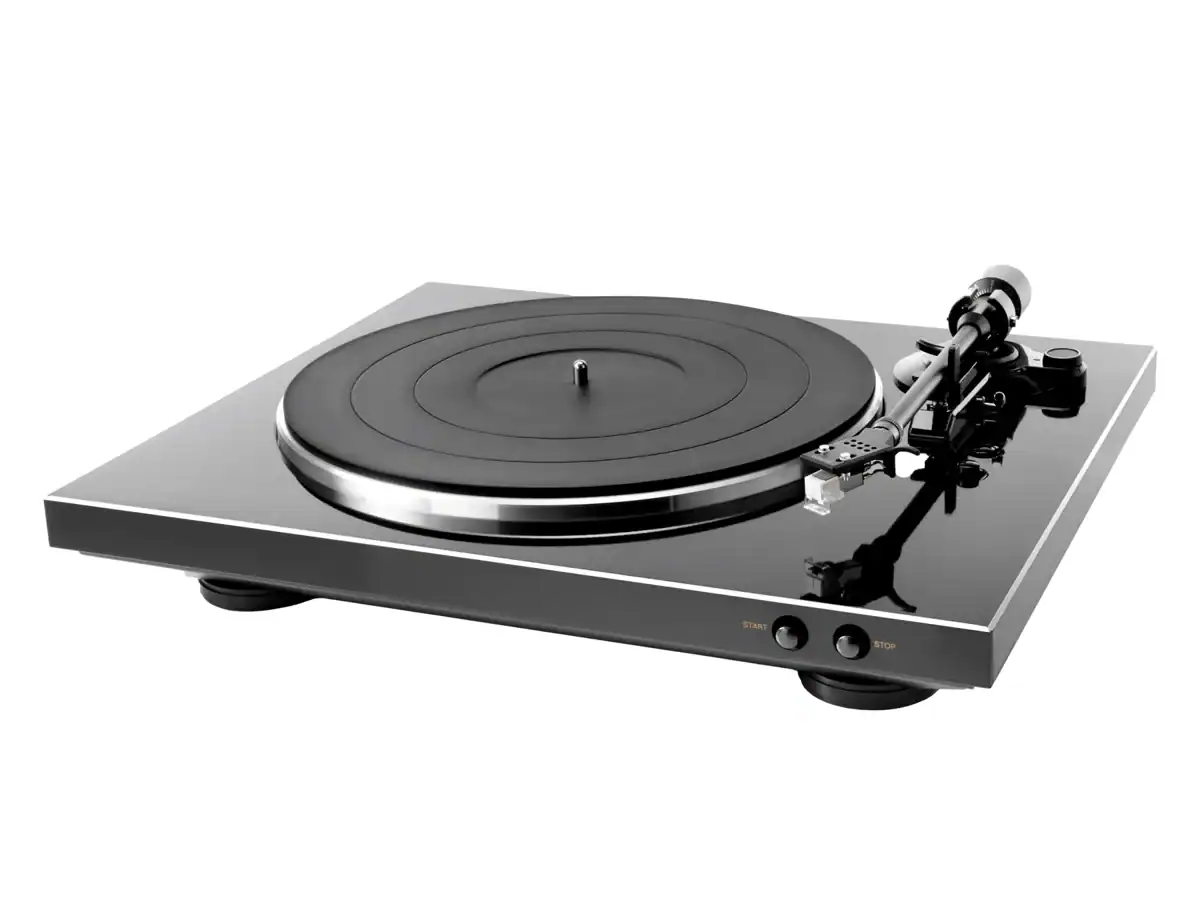
Denon DP‑400
Semi-automatic, built-in preamp, 33, 45 and 78The successor to the DP‑300F, but semi-automatic: you lower the needle yourself, and at the end of a side the arm lifts and the motor stops, so the stylus is safe if you walk away. The phono preamp is built in and switchable, and it plays 78s too.
The catch: you still return the arm to its rest by hand, and the dust cover has no hinges, so it comes off to play.
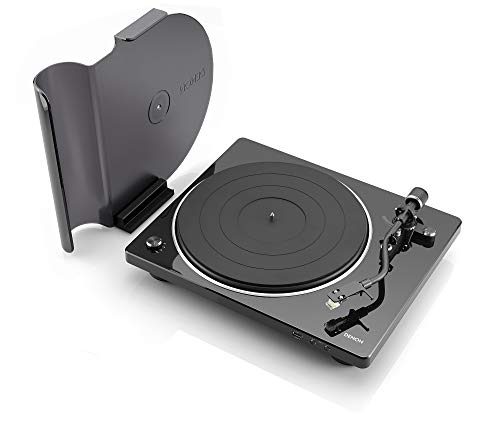
Denon DP‑450USB
The DP‑400 plus USB recordingThe same turntable as the DP‑400, plus a USB port that records straight to a flash drive. Buy it only if you’ll record; otherwise the DP‑400 is the same deck for less.

Pro‑Ject T2 Super Phono
Manual, Sumiko Rainier, strong built-in preampTested by usThe pick if you want one box that sounds properly hi-fi into any speakers, and we have since tested it ourselves: 24 days, about 25 hours, next to the T1 Evo BT and AT-LP120XUSB. With levels matched, the bass on “So What” was a little fuller and the percussion on “Reckoner” a little smoother than on the T1, and its speed held steady at 33.36 rpm in our check. SoundStage’s Thom Moon gave it a Reviewers’ Choice award and found its cueing the gentlest he could remember.
The catch: through modest speakers like ours, the step up from the T1 Evo BT is small. The built-in preamp is good, not great: when SoundStage bypassed it for a high-end external phono stage, the sound opened up clearly. It’s fully manual, and the cartridge can’t be swapped quickly. The Amazon listing also mentions Bluetooth; it doesn’t have any.
Over $1,000
Where you pay for a better arm, platter and motor, not for features.

Pro‑Ject Debut PRO B
Manual, balanced MM cartridge, no built-in preampThe Debut PRO, which won EISA’s Best Value Turntable award for 2021 to 2022, refitted with Pro-Ject’s balanced Pick it PRO B cartridge and a mini-XLR output. It has no built-in preamp, so it needs a PHONO input or a phono stage.
The catch: the balanced output only pays off with a balanced phono stage such as Pro-Ject’s S3 B. On a normal PHONO input it works like any moving-magnet turntable, which is fine.

Pro‑Ject X1 B
Heavier acrylic platter, same balanced cartridgeA step up in mass: a 1.5 kg acrylic platter and a carbon and aluminum arm, with the same balanced cartridge as the Debut PRO B. Buy it over the PRO B only if the extra money comes easily; the PRO B gets you most of the way there. The same balanced note applies.
Technics SL‑100C
Direct drive, auto-lift, sold by AmazonTechnics direct drive built for the hi-fi rather than the DJ booth: no pitch control or strobe, no built-in preamp, and an auto-lift that raises the arm at the end of a side. SoundStage reviewer Thom Moon runs one as his own reference turntable.
The catch: the platter keeps turning after the lift unless you enable its hidden auto-stop. See it as a complete system in the Direct-Drive Hi-Fi.

Dual CS 529
Fully automatic, Bluetooth, Ortofon 2M RedThe only fully automatic turntable at this level we’d suggest: press start and it cues itself, with Bluetooth aptX HD, an Ortofon 2M Red and a switchable built-in preamp. SoundStage reviewer Thom Moon rated that preamp among the best built-in stages he’d tried and praised the build, and Dual covers the turntable for five years.
The catch: his measurements showed more speed wobble than Dual claims, though he heard it only once, and the feet don’t adjust for leveling. The 2M Red can also sound bright on loud rock pressings.
Also considered, and why we left them out
NAD C 328 amplifier. A good alternative to the Yamaha A‑S501 if you also want Bluetooth streaming from your phone. It has an MM phono input that SoundStage found unusually quiet, and it’s built for 4-ohm speakers. We still prefer the Yamaha for these systems: it makes more power and usually costs less. NAD C 328 price
Sony PS‑LX310BT. The only new listing we found was $448 from a third-party seller on November 2, 2026, more than Sony’s newer PS‑LX3BT. Buy the LX3BT instead.
Audio-Technica AT‑LP7. The only new listing we found was a single unit from a third-party seller at $999 on November 2, 2026. At that money, the T2 Super Phono is the better buy.
Pro‑Ject Automat A1. Owner ratings on Amazon sit at 3.3 stars, with complaints about the automatic mechanism.
Technics SL‑1200 series, Technics SL‑1500C, Rega Planar 1 and 3. Not sold new on Amazon in the US when we checked.
Our method
How we tested these record player setups
Setups 1 to 5 were assembled and listened to as complete systems at home; for 6 to 8 we tested the parts separately, and each card says exactly how. Here’s exactly how.
A 97 sq ft home office, 118 and 140 sq ft bedrooms or offices, and 183 to 215 sq ft living rooms, matching each setup to the room it’s meant for.
From 10 days for the Audioengine A2+ to four weeks for the Klipsch RP-600M II and Yamaha A-S301, roughly 12 to 32 hours per product.
Kind of Blue, Rumours, The Dark Side of the Moon, Aja, In Rainbows, Come Away With Me, London Calling and Random Access Memories, so every setup was judged on familiar material.
Speakers on stands where they were meant to be, 5 to 20 inches from the wall, moved until the bass balance settled, and noted in each setup.
Where a setup can run either way, we compared the turntable’s own preamp with the speakers’ or amplifier’s phono input at matched volume, and Bluetooth against the cable through the same speakers.
No manufacturer sends us gear or pays for placement. Specs we quote come from the makers, and the sources are listed below.
Products we haven’t tested are chosen from published reviews with measurements, maker specifications and long-term owner reports, then checked on Amazon for stock, seller and price on the day we update. They’re always labeled “Researched”, never given a hands-on score, and each one lists its catch.
Sources for the specs we quote
- Edifier: connecting the R1280DB to a turntable (needs a turntable with a built-in preamp)
- Audioengine: A2+ Gen 3 technical specifications (Bluetooth 5.3, aptX Adaptive, USB-C)
- Crutchfield: Kanto YU4 features (switchable built-in phono preamp)
- B&H: Yamaha A-S301 specifications (MM phono input, no built-in Bluetooth)
- Fluance: RT82 user manual (three adjustable feet; the Ortofon OM10 tracks at 1.5g)
- Technics: SL-40CBT specifications (AT-VM95C cartridge, built-in MM phono stage, Bluetooth 5.4)
- SoundStage! Access: Technics SL-100C review (no pitch control, auto-lift)
- SoundStage! Access: Dual CS 529 review (speed measurements, built-in phono stage, five-year warranty)
- SoundStage! Access: Pro-Ject T2 Super Phono review (built-in dual-stage phono preamp)
- What Hi-Fi?: KEF Q3 Meta review (five stars, 4-ohm nominal impedance)
- What Hi-Fi?: Pro-Ject Debut PRO B announcement (balanced cartridge and output)
- Turntable Lab: Denon DP-300F vs DP-400 and DP-450 (semi-automatic stop, removable dust cover, USB)
Questions
Record player setup: common questions
How do you set up a turntable for the first time?
Place it on a level surface away from the speakers, fit the platter and belt, balance the tonearm, set the tracking force and matching anti-skate, then connect it with exactly one phono preamp. Automatic decks like the AT-LP70X skip the balancing: it is set at the factory.
What do I need for a record player setup?
Three things: a turntable, one phono preamp and speakers with amplification. The preamp can be built into the turntable, the speakers or the amplifier, so most setups are just two boxes.
What is the best record player setup for beginners?
The AT-LP70X with Edifier R1280DB speakers. It’s fully automatic, connects with one cable and gives you a stylus upgrade path later.
Do I need a phono preamp?
You need exactly one. If your turntable has one built in, set it to LINE. If your speakers or amplifier have a PHONO input, use that instead. Never use two.
Can I use Bluetooth speakers with a record player?
Yes, with a Bluetooth turntable like the AT-LP3XBT. In our listening, Bluetooth sounded close to a cable at normal volume.
Why does my turntable hum?
Usually the ground wire isn’t connected on a PHONO connection, or an RCA cable runs beside a power adapter. Check the switches, connect the ground, then move the cables.
How much does a good vinyl setup cost?
A good starter setup costs under $500 in total. A living-room system with a better turntable and speakers costs roughly twice that, and a full hi-fi system more. Every setup on this page shows a live total.
What cable do I need to connect a turntable to speakers?
A standard RCA cable, usually included with the turntable. For a PHONO connection, also attach the turntable’s ground wire. Passive speakers like the Klipsch RP-600M II also need speaker wire from the amplifier.
What is the difference between powered and passive speakers?
Powered speakers have the amplifier built in, so the turntable plugs straight into them. Passive speakers need a separate amplifier, like the Yamaha A-S301 in our hi-fi setup, which adds a box but gives you more room to upgrade later.
What is the best record player setup over $1,000?
For a hi-fi system, a Technics SL-100C into the phono input of a Yamaha A-S501, with KEF Q3 Meta speakers: our researched Direct-Drive Hi-Fi. If you want it fully automatic with Bluetooth, the Dual CS 529 is the one turntable at that level we’d suggest.
Can I digitize my records with a record player setup?
Yes, with a USB turntable. The AT-LP120XUSB is our tested pick and the AT-LP60XBT-USB is the automatic option; both plug into a computer. The Denon DP-450USB records straight to a USB flash drive.
Prices last updated Nov 15, 2026, 8:48 AM EST. Product prices and availability are accurate as of the date/time indicated and are subject to change. Any price and availability information displayed on Amazon.com at the time of purchase will apply to the purchase of this product.
Question 1
Just the turntable. We’ll add anything else you need.
Question 2
Pick the picture that matches. Next, you tell us which parts you already own.
Question 2
Everything is ticked. Untick anything you already own.
Does your amplifier have a PHONO input?
Check the back: a PHONO input is labeled PHONO and usually sits next to a small ground screw.
Question 3
Slide to where you are. There’s no wrong answer.
Question 4
From press-a-button to the full ritual.
Question 5
Pick any, or skip.
Hands-on tested turntables come first; researched picks are always labeled. Prices come live from Amazon; we may earn a commission. How we test













Denon DP-300F


James Calloway is the pen name of VinylPickup's founder, who has collected vinyl for 22 years and spent six of them behind the counter at an independent record store in Chicago, where he set up and evaluated turntable systems across every budget. His listening runs toward jazz, classic rock and well-recorded acoustic music, and his reviews flag it when that bias matters. Every review is labeled hands-on or research-scored, prices come live from Amazon with the time they were checked, and mistakes get corrected publicly. No manufacturer sends free products, and no affiliate relationship changes what he says. How VinylPickup tests and scores · More about James