
Twenty-eight must-have vinyl records, chosen across ten genres for what each one does specifically on a good turntable. This is not a greatest albums list. It is a pressed-vinyl argument: these are the records that reveal something in the groove that no digital format delivers with the same authority. A clean pressing of Kind of Blue sounds different from the streaming version – not better in the abstract, but different in ways that become obvious the first time you hear it through a proper cartridge in a quiet room. The same argument applies to every record here, whether it was recorded in 1959 or 1991. For the equipment that makes these records sound their best, the complete turntable guide covers every budget.
Jazz
1. Miles Davis, Kind of Blue

Miles Davis, Kind of Blue
The opening notes of So What have a weight and presence on vinyl that no digital format has matched. Paul Chambers’ bass is physical. The space between the instruments is audible in a way that reveals the size and acoustic character of the Columbia 30th Street Studio. The 2015 Columbia/Legacy remaster is the easiest to find and sounds very good.
2. John Coltrane, A Love Supreme

John Coltrane, A Love Supreme
Side one of A Love Supreme builds from a bass motif into something that feels less like a recording and more like a document of a specific moment. The vinyl groove captures the dynamics of Elvin Jones’s drumming – specifically the way his brushwork moves from near silence to full intensity – in a way that compressed digital audio does not. The Acoustic Sounds 180g remaster is the best current pressing.
3. Dave Brubeck Quartet, Time Out

Dave Brubeck Quartet, Time Out
The 1959 Columbia recording has a dryness and space in the mix that vinyl reproduces with more presence than any digital master. Paul Desmond’s alto saxophone on Take Five has a specific intimacy on a good pressing – the microphone placement is close, the room is quiet, and the instrument is right there in front of you. This is the record that proved odd time signatures could be as compelling as a standard blues form. It sounds better at lower volume than at high volume, which is unusual and worth knowing before you sit down with it.
4. Stan Getz and Joao Gilberto, Getz/Gilberto

Stan Getz and Joao Gilberto, Getz/Gilberto
The Girl from Ipanema was recorded at the RCA Studios in New York in 1963. Astrud Gilberto’s vocal is at three feet from the microphone, Getz’s saxophone somewhere further back. The distance between them is audible on vinyl. The intimacy of the recording transfers to the format in a way that suits late evenings at low volume on a good system.
5. Herbie Hancock, Maiden Voyage

Herbie Hancock, Maiden Voyage
Maiden Voyage is the jazz record I recommend to people who think they do not like jazz. The title track opens with a chord voicing that sounds like water moving and never loses that quality across the whole album. The Blue Note Classic Vinyl Series pressing – all-analog, mastered by Kevin Gray from the original tapes, 180g – is the correct version to own. It is also the most affordable way to own a properly mastered Blue Note record at this price point.
Rock
6. The Clash, London Calling

The Clash, London Calling
London Calling is the record I use to test every turntable I review. Paul Simonon’s bass on the title track tells me immediately whether a cartridge can track a groove accurately and whether a deck has the timing to make rock music feel urgent rather than mechanical. The 2004 remaster on Epic is the standard recommendation.
7. Fleetwood Mac, Rumours

Fleetwood Mac, Rumours
Rumours from 1977 is one of the best-produced records ever made and vinyl rewards that production in a way that streaming does not. The stereo image is exceptionally wide. Christine McVie’s piano sits clearly to the left, Lindsey Buckingham’s guitar to the right, and Mick Fleetwood’s drumming fills the centre with a physicality that is almost tactile on a good turntable.
8. The Beatles, Abbey Road

The Beatles, Abbey Road
The second side of Abbey Road is a continuous medley designed to be experienced as a whole, uninterrupted. Vinyl enforces this in a way that shuffle play never will. You sit down, you drop the needle, you listen. The 2019 remix by Giles Martin is the version to buy. It sounds extraordinary and reveals details in the recording that the original mastering buried.
9. Bruce Springsteen, Darkness on the Edge of Town

Bruce Springsteen, Darkness on the Edge of Town
Darkness on the Edge of Town is not Springsteen’s most celebrated record but it is his best one on vinyl. The production has a density and controlled compression that suits the format well. Badlands and Racing in the Street in particular have a rawness that the digital version softens. The 180g remaster, cut from the original analogue tapes by Bob Ludwig, is the right choice over any earlier standard pressing.
10. Led Zeppelin, Led Zeppelin IV

Led Zeppelin, Led Zeppelin IV
Led Zeppelin IV contains When the Levee Breaks, recorded with John Bonham’s drums in the stairwell at Headley Grange with microphones on the first floor landing. On vinyl, the opening kick drum hit lands like a physical event. The 2014 remaster on Atlantic supervised by Jimmy Page is the definitive modern pressing.
11. Pink Floyd, The Dark Side of the Moon

Pink Floyd, The Dark Side of the Moon
The Dark Side of the Moon has never left the Billboard 200 since 1973, charting for 741 consecutive weeks. The 2016 remaster from the original analogue tapes by James Guthrie and Bernie Grundman is the version to own: 180g vinyl, original gatefold artwork, two posters, two stickers. The heartbeat that opens Speak to Me has a physical quality on vinyl that headphone listeners miss entirely. The Great Gig in the Sky – Clare Torry’s improvised vocal – is the single track on this list that most clearly demonstrates what vinyl does that no digital format replicates at the same scale.
Soul and Funk
12. Marvin Gaye, What’s Going On

Marvin Gaye, What’s Going On
What’s Going On from 1971 proved that soul music could carry political and social commentary without losing any of its beauty. On vinyl, the album plays as a continuous piece rather than a collection of singles. Motown recorded it with a fluidity – layered voices and instruments creating a soundscape rather than a song sequence – that the format handles better than any other. The 50th Anniversary 2LP pressing is the correct version to own.
13. Stevie Wonder, Songs in the Key of Life

Stevie Wonder, Songs in the Key of Life
Songs in the Key of Life is a double album plus a bonus 7″ EP and it is worth every minute. Stevie Wonder was at the peak of his powers when he recorded this. Isn’t She Lovely on vinyl has a warmth and presence that the streaming version is not. The 2026 Motown reissue includes the original bonus EP – Saturn, Ebony Eyes, All Day Sucker – on a separate 7″. This is the record I give people when they get married.
14. Aretha Franklin, I Never Loved a Man the Way I Love You

Aretha Franklin, I Never Loved a Man the Way I Love You
Recorded at FAME Studios in Muscle Shoals, Alabama in January 1967, this is the first album Aretha Franklin made for Atlantic Records after leaving Columbia. The piano playing on Respect is Aretha’s own – she rewrote Otis Redding’s song from scratch and recorded it in a single three-hour session. The Atlantic soul recordings of 1967 have a room sound that vinyl preserves in a way digital transfer consistently fails to match. The horns on the title track have a bite and physical presence on a good turntable. There is no more essential soul album on vinyl.
Electronic
15. Daft Punk, Random Access Memories

Daft Punk, Random Access Memories
Random Access Memories was recorded specifically to sound exceptional on vinyl and it does. Daft Punk hired the best session musicians in the world and recorded everything live to tape. Get Lucky has a groove that a turntable communicates better than any digital source. This is the record that convinced a generation born in the 1990s to buy a turntable.
16. Aphex Twin, Selected Ambient Works Volume II

Aphex Twin, Selected Ambient Works Volume II
Selected Ambient Works Volume II from 1994 is not easy listening. It is four records of slow, textural, sometimes unsettling ambient music with no conventional song structure and no beats. On vinyl it is magnificent. This is the record that tests whether a system can reproduce silence as effectively as sound. The 2024 expanded edition on Warp includes all tracks on vinyl for the first time. Play it through a decent phono preamp and the low-end texture is something different entirely.
17. Boards of Canada, Music Has the Right to Children

Boards of Canada, Music Has the Right to Children
Music Has the Right to Children from 1998 sounds like a memory of a childhood you may not have had. The Warp Records vinyl pressing has a warmth and depth that the CD version entirely lacks. On a good turntable the stereo image is unusually wide and the low frequencies catch you off guard. This is electronic music for people who think they do not like electronic music.
Hip-Hop
18. Nas, Illmatic

Nas, Illmatic
Illmatic from 1994 is forty minutes long and contains no weak moments. The drum programming has a tightness and clarity that vinyl communicates well. New York State of Mind has one of the best opening verses in rap history and hearing it on a clean pressing is a different experience from a phone speaker or a laptop.
19. Madvillain, Madvillainy

Madvillain, Madvillainy
Madvillainy from 2004 is MF DOOM and Madlib and it sounds like nothing else. Madlib produced the beats from samples so obscure that most have never been identified, and DOOM raps over them in a flow that treats rhyme as texture rather than structure. On vinyl the sampling aesthetic makes more sense than it does on digital. This is the hip-hop record for people who gave up on hip-hop.
20. Kendrick Lamar, To Pimp a Butterfly

Kendrick Lamar, To Pimp a Butterfly
To Pimp a Butterfly from 2015 is the most ambitious hip-hop record of its decade. It is a live band record and the instrumentation on vinyl has a warmth and presence that the digital version only hints at. Wesley’s Theory opens with George Clinton and a bass line that on a good system is a physical event in the room. The 10th anniversary 2LP pressing on 180g is the current recommendation.
Folk and Acoustic
21. Joni Mitchell, Blue

Joni Mitchell, Blue
Blue from 1971 is the most emotionally honest record on this list. Joni Mitchell recorded it with almost no overdubs, mostly alone with a guitar or a dulcimer. On vinyl the closeness of the microphone placement is audible. You can hear the room, the breath, the slight hesitations that make the performances feel unguarded. The 2022 Bernie Grundman remaster, cut under Mitchell’s supervision from the original Reprise tapes, is the definitive modern pressing. This is the record I give people when they ask me where to start.
22. Bob Dylan, Blood on the Tracks
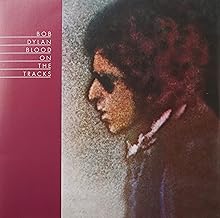
Bob Dylan, Blood on the Tracks
Blood on the Tracks from 1975 is the breakup album as art form. Dylan recorded it twice, scrapping the first version and re-recording most of it in Minneapolis in a matter of days. The urgency of those sessions is audible on vinyl in a way the CD version smooths over. Tangled Up in Blue has a momentum that suits the format well. If you own one Dylan record on vinyl, this is the one.
23. Nick Drake, Pink Moon
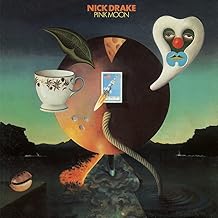
Nick Drake, Pink Moon
Pink Moon from 1972 is Nick Drake, an acoustic guitar and occasional piano. Recorded in two nights in London and clocks in at just over 28 minutes. On vinyl the intimacy of the recording is almost uncomfortable. The guitar sounds like it is in the room. The Island 180g reissue is an analogue cut from the original master tapes. Before you play it, clean the record: the surface noise floor matters more on a recording this sparse than on almost anything else on this list.
Post-Punk
24. Joy Division, Unknown Pleasures

Joy Division, Unknown Pleasures
Unknown Pleasures from 1979 sounds like it was recorded in a submarine. Martin Hannett produced it with Peter Hook’s bass pushed so far forward in the mix that it functions as a lead instrument. On vinyl that bass has a physical presence that digital normalisation removes. The cover – a radio signal map of pulsar CP 1919 from a Cambridge astronomy textbook, adopted by designer Peter Saville – is the most reproduced image in post-punk history. Disorder opens with a snare hit that on a clean pressing lands as a physical event. The Rhino 35th anniversary 180g pressing replicates the original Factory Records textured sleeve faithfully.
80s Pop and R&B
25. Michael Jackson, Thriller

Michael Jackson, Thriller
Thriller is the biggest-selling vinyl album of all time. Quincy Jones produced it with a dynamic range that digital streaming reduces on every platform. Billie Jean has a bass line that a good turntable communicates as a physical event in the room. The string arrangements on Human Nature have a stereo width that compression squashes on every digital version. Owning Thriller on vinyl is not nostalgia. It is the correct format for an album whose production was specifically designed to reward what a well-pressed record can deliver.
26. Prince, Purple Rain

Prince, Purple Rain
Prince supervised the 2015 Paisley Park remaster of the original tapes and the 180g vinyl release is the version he approved. When Doves Cry has no bass line – Prince deliberately removed it in the studio – and on vinyl the silence where the bass should be is audible and intentional. The title track ends with a guitar solo that builds over four minutes into something a good phono cartridge communicates differently than any digital source. Rolling Stone ranked Purple Rain second on their list of the best albums of the 1980s.
Reggae
27. Bob Marley & The Wailers, Exodus

Bob Marley & The Wailers, Exodus
Exodus was recorded in London in 1977 while Marley was in exile following an assassination attempt in Jamaica. The Island Records mastering has a warmth and low-end weight in the bass that the reggae rhythm section demands and digital compression removes. Natural Mystic opens side one with a synthesiser tone that on vinyl seems to come from inside the room rather than the speakers. The record divides cleanly into two halves: political on side one, romantic and hopeful on side two. No other structure in Marley’s catalogue is as considered or as complete.
90s Alternative
28. Nirvana, Nevermind

Nirvana, Nevermind
Nevermind replaced Michael Jackson’s Dangerous at number one on the Billboard 200 in January 1992 and has sold over 30 million copies. On vinyl the opening snare hit of Smells Like Teen Spirit has a weight that the compressed streaming version domesticates. Nirvana recorded it at Sound City Studios in Van Nuys, California – the same room where Fleetwood Mac recorded Rumours – and the room sound is in the groove. This is a record for anyone who thinks they only like hip-hop or jazz or electronic music. It crosses every genre boundary.
How to buy without getting burned
Where to buy
For new releases, Amazon is the most reliable source for standard pressings. For second-hand records, Discogs is the global marketplace. Every seller has a feedback rating and every listing specifies the pressing and condition. Local record stores are worth visiting for the experience of browsing but prices vary enormously. The best finds come from charity shops where records are priced by people who do not know what they have.
Original pressings vs represses
An original pressing is the first manufacturing run of a record, made as close as possible to the master tape. For most records on this list a good modern reissue is the right choice. For jazz records from the 1950s and 1960s on Blue Note, Impulse or Prestige, an original pressing is worth seeking out at a fair price. For serious pressing research, Analog Planet reviews specific pressings in detail and is worth reading before spending serious money.
Vinyl record condition grading
NM / Near Mint: Almost perfect, minimal handling. The standard for serious collectors.
VG+: Light marks visible under strong light, no audible effect. Good for listening.
VG: Surface marks that may cause some noise. Acceptable if the price is right.
G / Good: Significant damage affecting playback. Avoid unless irreplaceable.
Frequently Asked Questions
Start with something you already love in another format. After that, Kind of Blue, Rumours, and Nevermind are the three I recommend most consistently. They cover three different genres and all three sound exceptional on vinyl. Each one will tell you something different about what the format does well.
For jazz records from the 1950s and 1960s on Blue Note, Impulse or Prestige, an original pressing is worth seeking out at a fair price. For most rock and pop from the 1970s onwards, a well-reviewed modern reissue is the better choice. Modern remastering from original tapes can produce results that exceed earlier pressings technically.
Sometimes better. Labels like Mobile Fidelity Sound Lab, Analogue Productions and Music on Vinyl produce pressings technically superior to many originals. The Blue Note Classic Vinyl Series – all-analog, mastered by Kevin Gray – is a clear example of a modern reissue that improves on earlier pressings for most listeners.
Jazz. The original Blue Note, Impulse and Prestige recordings from the 1950s and 1960s were made with minimal studio processing and transfer exceptionally well to vinyl. Start with Kind of Blue, A Love Supreme and Time Out. If jazz is not your entry point, Rumours and Abbey Road are the two rock records most likely to make a new listener understand what the format does.
For new releases: Amazon. For second-hand: Discogs. For audiophile pressings: Mobile Fidelity Sound Lab and Analogue Productions both sell direct. For independent music and harder to find titles, Bandcamp allows many labels and artists to sell directly on vinyl.


