
Home / Cartridges / Review
CartridgesOrtofon 2M Blue Review
The upgrade most 2M Red owners should make: more detail and cleaner inner grooves, as long as your system can show it.
The best upgrade for 2M Red owners
More detail, better separation and cleaner inner grooves, from a one-minute stylus swap.
Value is 8.5: it is revealing, so rough pressings and modest systems will not show what it costs.
- ✓You own a 2M Red on a turntable around $400 or more
- ✓You want more detail and cleaner inner grooves
- ✓You have a decent phono stage, or plan one
- ✕Your turntable is entry-level: the system will hide the gain
- ✕Most of your records are worn or bright pressings
- ✕You are starting from scratch: also consider the AT-VM95ML
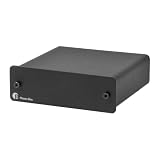
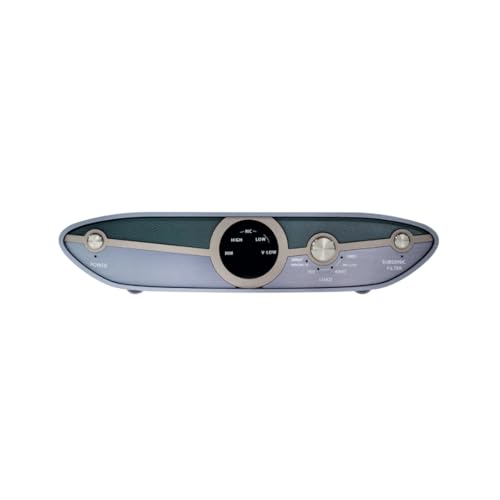
How we tested: 4 weeks and about 30 hours of play on an AT-LP120XUSB and a U-Turn Orbit Plus, mainly through a Pro-Ject Phono Box DC (also an iFi Zen Phono 3), swapping the Red and Blue styli on the same body at 1.8g. Records: Kind of Blue, Joni Mitchell's Blue, Rumours and Hugh Masekela's Hope. Our testing method
What Works
- ✓Cleaner sibilants and inner grooves than the 2M Red
- ✓More detail and stereo separation on good pressings
- ✓The stylus fits a 2M Red body: a one-minute upgrade
- ✓5.5 mV output works with any moving-magnet phono stage
What Does Not
- −Revealing: worn pressings show more ticks and crackle
- −Bright records can sound forward, especially through bright phono stages
- −Angular body tempts you to align by the body, not the cantilever
- −The stylus guard is awkward to remove and refit
What to Pay for the Ortofon 2M Blue
Already own a 2M Red? The Blue stylus alone fits your body with no realignment and usually costs about $50 less.

Ortofon 2M Blue at a Glance
| Type | Moving magnet (MM) |
|---|---|
| Stylus | Nude elliptical diamond |
| Output | 5.5 mV |
| Tracking force | 1.6 to 2.0 g, 1.8 g recommended |
| Weight | 7.2 g |
| Load | 47k ohm, 150 to 300 pF including cable |
| Mount | Standard half-inch |
| Stylus fits | 2M Red and 2M Silver bodies |
| Other versions | 2MR Blue for Rega arms, 2M Blue Verso for bottom-mount headshells |
Ortofon's official 2M Blue overview. It plays from YouTube when you press play.
What Changes From the Red: Only the Stylus
In shortSame body, same generator. The Blue swaps the Red's bonded elliptical tip for a nude elliptical one.
- Elliptical diamond bonded to a metal shank
- Forgiving: hides some wear and surface noise
- More mass at the tip, slightly less fine detail
- Nude elliptical: a solid diamond, no metal shank
- Less mass, traces the groove more precisely
- Less forgiving of worn pressings
Because the body is shared, a Red owner can pull off the red stylus and push on the blue one in under a minute, with no tools and no realignment. That is the cheapest real upgrade in the 2M range, and why the Blue has been the default second cartridge for Red owners for years.
The 2M upgrade ladder: stylus swap or new cartridge?
- 2M RedThe starting point
- Stylus swap
- 2M BlueSame body as the Red
- New cartridge
- 2M BronzeDifferent body
- Stylus swap
- 2M BlackSame body as the Bronze
The costly mistake: a Bronze or Black stylus does not fit a Red or Blue body. Going past the Blue means a new cartridge; after that, the Bronze body takes a 2M Black stylus.
Sound Character
In shortMore detail, better separation and cleaner sibilants than the Red, at the cost of being less forgiving.
On Vocals and Jazz
On Kind of Blue, Bill Evans' piano had texture and space between notes that the Red compresses slightly, and the spaces between notes seemed more defined, without the slightly fuzzy character the Red adds. That is cleaner, not necessarily quieter: we would not claim a measurably lower noise floor. On Joni Mitchell's Blue, the "s" sounds in "River" came through a little cleaner; the Red put a slight gritty edge on louder consonants, while the Blue kept them controlled.
On Rock and Older Pressings
On Rumours, Mick Fleetwood's cymbals on "The Chain" had shimmer and definition rather than the Red's slight splash. The same honesty cuts the other way: on our older Rumours pressing, a few ticks and crackles were slightly more noticeable with the Blue. It does not hide imperfections as well as the Red (clean records and anti-static inner sleeves help more than any cartridge), and through the brighter iFi Zen Phono 3 some bright records sounded a little forward. On a couple of rougher pressings we preferred the Red's smoother presentation.
At the Inner Grooves
The real inner-groove test was "The Last Time I Saw Richard," the last track on side two of Blue. The Blue held vocal clarity together toward the label without obvious breakup or persistent spitting; the Red was not bad, just a little less composed on demanding passages. The Blue does not eliminate sibilance, though: poor alignment or a rough pressing can still make it harsh. Break-in was not dramatic. After 15 to 20 hours it seemed a touch smoother, but we could not separate that from simply getting used to it.
2M Blue vs 2M Red: A/B Comparison
In shortSame body, same deck, same phono stage, same records. The Blue is the better stylus; the Red is the more forgiving one.
| Our A/B | 2M Red | 2M Blue |
|---|---|---|
| Stylus | Bonded elliptical | Nude elliptical |
| Detail and separation | Good | Better: more space around instruments |
| Sibilance ("River") | Slight grit on loud consonants | Cleaner, more controlled |
| Inner grooves ("Richard") | A little less composed | Holds together toward the label |
| Worn pressings | Hides ticks better | Shows more ticks and crackle |
| Bright records | Smoother | Can sound forward |
| Best for | Entry decks, rough pressings | Decks around $400+, good pressings |
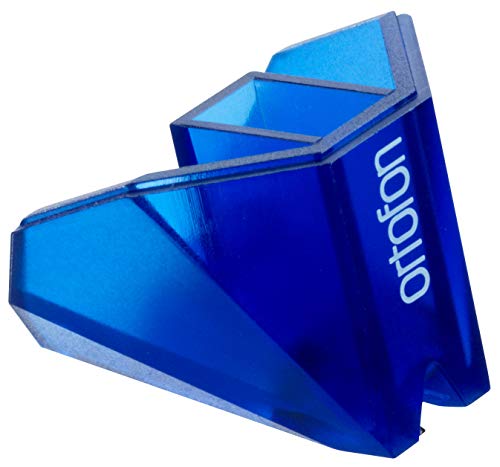

Still on the fence? The 2M Red remains the better match for entry-level turntables and rough pressings.

2M Blue vs AT-VM95ML: The Real Competition
In shortStarting from scratch, the VM95ML deserves a serious look. Owning a 2M Red, the Blue stylus is the easy answer.
Audio-Technica's AT-VM95ML uses a microlinear stylus, a more advanced profile than the Blue's elliptical. In AnalogPlanet's blind comparison, Michael Fremer found the two clearly different, called the 2M Blue somewhat more open on top, and said which you prefer depends on your system and taste: at their price, both give more than your money's worth. The VM95ML also has a lower output than the Blue, so it asks a little more gain of your phono stage.
Which to Buy: Blue or VM95ML
- You already own a 2M Red: the stylus is a one-minute upgrade
- You prefer a more open top end
- Your phono stage has modest gain: 5.5 mV output is forgiving
- You are starting from scratch on a $500+ turntable
- You prefer a less open, more relaxed top end
- You want an advanced stylus profile for the money
Setup and Installation
In shortA stylus swap takes under a minute. A fresh install takes care with alignment.
Fresh Installation and Alignment
- 1Red owner: swap the stylusHold the body steady, grip the red stylus at its base and pull straight forward; push the blue one on. No tools, no realignment.
- 2Fresh install: mount itStandard half-inch mount. The bolts thread straight into the body, so there are no loose nuts to hold.
- 3Align the cantilever, not the bodyThe angular body is misleading. Set the stylus on a protractor null point and make the cantilever parallel to the grid lines.
- 4Set 1.8 g with a digital scaleThen match anti-skate. A Red owner keeps the same 1.8 g after the swap.
- 5Mind the stylus guardIt is awkward to remove and refit: slide it off straight, and keep it on whenever you move the tonearm.
A free printable protractor from Vinyl Engine is enough for a correct alignment. It will not fit turntables with an integrated cartridge, such as the Sony PS-LX310BT or AT-LP60X; most automatic turntables are in the same position.
Pair It With
The Blue rewards a good phono stage more than the Red does. These are what we used.


Step up to the Ortofon 2M Bronze

A nude fine-line stylus for more resolution. It is a new cartridge, not a stylus swap, and its body later takes a 2M Black stylus. Worth it on a turntable around $700 or more with a dedicated phono stage; we have not tested it hands-on. Our cartridge guide covers the full range.
Who Should Buy the 2M Blue
In short2M Red owners with a capable system, first. New buyers on a good deck, second.
If you own a 2M Red on a turntable around $400 or more, the Blue stylus is the most cost-effective upgrade your system has: genuine, audible, and done in a minute. On an entry-level deck, save the money for the turntable first; the system will hide most of the gain. And if your collection leans on worn or bright pressings, the Red's forgiving character may suit you better. For decks that pair well with it, see our best turntables guide. Buying a turntable anyway? The Fluance RT85 comes with a 2M Blue already fitted and aligned, which is often cheaper than buying a deck and the cartridge separately.
What Other Reviewers and Owners Say
Final Verdict
Questions Buyers Ask
Is the Ortofon 2M Blue worth the upgrade from the 2M Red?
Yes, on a turntable around $400 or more with a decent phono stage. In our A/B on the same body, the Blue gave cleaner sibilants, better separation and cleaner inner grooves. On an entry-level deck the system hides most of the gain.
Can I put the 2M Blue stylus on my 2M Red body?
Yes. The Red and Blue share the same body and generator, so the Blue stylus pushes straight on, with no tools and no realignment. Keep the tracking force at 1.8 g.
What turntables is the 2M Blue compatible with?
Any turntable with a standard half-inch mount and a removable headshell. It does not fit decks with an integrated cartridge, such as the Sony PS-LX310BT or AT-LP60X. Ortofon also makes a Rega-arm version (2MR Blue) and a bottom-mount version (2M Blue Verso).
2M Blue vs AT-VM95ML: which should I buy?
If you own a 2M Red, buy the Blue stylus. Starting from scratch on a $500+ turntable, the VM95ML deserves a serious look. AnalogPlanet's blind test found them clearly different, with the Blue more open on top, and concluded the choice depends on your system and taste.
What tracking force should I use with the 2M Blue?
1.8 g, set with a digital stylus scale, with anti-skate to match. If you swap the Blue stylus onto a 2M Red body, the tracking force stays at 1.8 g.
Does the 2M Blue reduce surface noise?
Not really. In our test it sounded cleaner on good pressings, but on an older, worn pressing it made ticks and crackle slightly more noticeable than the Red. It reveals more, good and bad.
Does the 2M Blue need a break-in period?
Not much. After 15 to 20 hours it seemed a touch smoother, but we could not separate that from simply getting used to it. Do not expect a dramatic change.
What phono preamp works best with the 2M Blue?
Any moving-magnet stage works: its 5.5 mV output and standard 47k ohm load need no adjustment. We used the neutral Pro-Ject Phono Box DC most; the iFi Zen Phono 3 sounded slightly bright with it on bright records.
Six years behind a Chicago record store counter taught him that a cartridge only reveals what the turntable and phono stage around it can pass through. No brand sends us products, and no brand pays for a score.
How we testRelated Guides
Prices last updated Nov 27, 2026, 5:34 PM EST. Product prices and availability are accurate as of the date/time indicated and are subject to change. Any price and availability information displayed on Amazon.com at the time of purchase will apply to the purchase of this product.


James Calloway is the pen name of VinylPickup's founder, who has collected vinyl for 22 years and spent six of them behind the counter at an independent record store in Chicago, where he set up and evaluated turntable systems across every budget. His listening runs toward jazz, classic rock and well-recorded acoustic music, and his reviews flag it when that bias matters. Every review is labeled hands-on or research-scored, prices come live from Amazon with the time they were checked, and mistakes get corrected publicly. No manufacturer sends free products, and no affiliate relationship changes what he says. How VinylPickup tests and scores · More about James